

Bringing Falconry values to Europe’s future
About us
FALCONERS have accumulated a wealth of knowledge and specialised skills over millennia. Their passion for raptors, quarry species, hunting grounds and nature in general have shaped the Falconry community as a most qualified group when dealing with issues such as conservation, sustainable hunting traditions, culture and animal welfare.
It is widely accepted that falconers have for centuries initiated and led efforts to champion these causes, with the remarkable advances in techniques and expertise developing in tandem with our vision of a judicious use of natural resources. Falconers’ contributions have been numerous and hugely significant in the biological research of wild raptors, their quarry species and habitats, not to mention other fields such as veterinary science, ethology, captive breeding, rehabilitation, release and restoration techniques, innovative legislation aimed at better conservation measures, and the perpetuation of sensible hunting traditions through cross-generational education.
UNESCO has recognised Falconry as an Intangible Cultural Heritage of Mankind in 18 countries, nine of them European. Cultural expressions of Falconry have left a very colourful heritage that can be found in archaeology, historical accounts, literary descriptions, art history, place and family names, music and theatre. In Europe, there is a remarkable variety of these expressions in a relatively small geographic territory.
EFFC’s main objective is to perpetuate and enhance the role of falconers within a European (or European-linked) context by supporting and eventually funding projects in which falconers’ participation is relevant. For this, we will be focussing on two main areas: Conservation & Animal Welfare, and Culture & Education.
Our goal is to ensure that Falconry contributes to 21st-Century European society, helping to safeguard the things that we hold dear for our children and grandchildren. We know that Falconry has a knowledge and skills base that qualifies us to play a significant role in this – as our slogan puts it: “Bringing Falconry values to Europe's future.”
José Manuel Rodríguez-Villa, EFFC Founding Chairman (2017-2025)
Council of Patrons

Helen Macdonald B.A., M.A.(Cantab), MPhil
“Conservation, cultural understanding and animal welfare are the three pillars of ethical falconry. To me, they are why the work of EFFC is so important in today’s fast-changing world."
Helen Macdonald is a falconer, naturalist and internationally renowned writer. They are best known for their 2014 memoir H is for Hawk, which depicted the training of a goshawk following their father's death. It won the Samuel Johnson Prize for non-fiction, the Costa Book Award and the Prix du Meilleur Livre Étranger, and has been translated into 24 languages. Macdonald is a contributing writer for The New York Times Magazine and also writes and presents television documentaries, including 2017's H is for Hawk: A New Chapter (BBC Natural World and PBS Nature). They have been a falconer since 1983, and while they have worked in raptor conservation, domestic breeding and education, their first love is falconry in the field.

J. Peter Jenny
“Opportunities to directly interact with wildlife have become all too rare as our society becomes increasingly divorced from our natural world. As both a falconer and a raptor biologist, I have been privileged to work hands-on with wild birds of prey and these experiences have been of inestimable value to our ability to implement effective conservation.”
After serving 11 years as its President and CEO, Peter Jenny retired from The Peregrine Fund, an organisation he has been a key component of since its foundation. In 1970, he accompanied founding director Robert Berry to the eastern Canadian Arctic to collect some of the first Peregrine Falcons to be used for the project’s captive breeding and went on to manage one of the early release sites on the Susquehanna River. After graduating from the University of Montana with a degree in Zoology, Mr Jenny pioneered The Peregrine Fund’s involvement in the Neotropics with his research on the rare Orange-breasted Falcon and subsequently co-founded the Maya Project to study the ecology of tropical raptors at a community level. During his 18-year tenure as The Peregrine Fund’s Vice President, he divided his time between managing the Northern Aplomado Falcon Restoration Project and overall programme development. A staunch advocate of collaborative approaches to conservation and private sector participation, Mr Jenny secured more than 2million acres of private land in support of wild falcon recovery and was instrumental in gaining federal and state approval for the resumption of a peregrine harvest for falconry in the US. Besides falconry, his other passions include English Setters, fly-fishing, sailing, and flying his restored 1947 Stinson.
Board Members and Experts
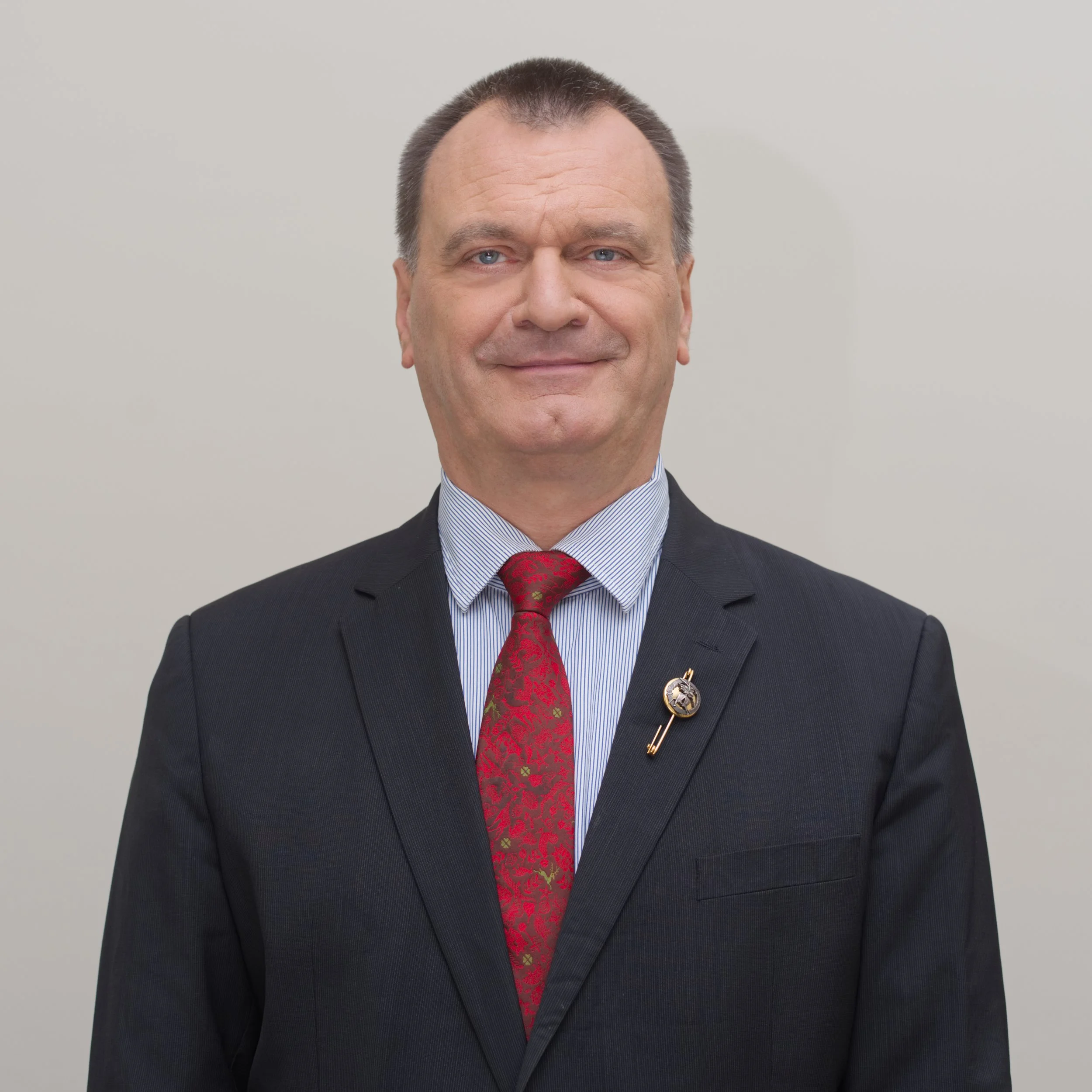
Janusz Sielicki – Chairman
Janusz has been involved in falconry for 50 years, and has been at the forefront of falconry in conservation. As well as managing numerous projects, he has published books and articles relating to the conservation of peregrines and sakers, and the history of falconry. Janusz was a team leader, manager, and author of Polish Falconry’s successful inscription on the list of UNESCO Intangible Cultural Heritage. Since 2000, he has been an officer of the International Association for Falconry and Conservation of Birds of Prey, serving as representative for Poland before joining the board and working as IAF Conservation Officer since 2012, and Vice President for Europe, Africa and Oceania of IAF from 2016 to 2021. In 2021, he was a recipient of the IAF Presidential Award for Services to Falconry. He has been Vice President of Society for Wild Animals Falcon since 2002, a member of Saker Task Force of the Convention for Migratory Species of IUCN since 2011, as well as a member of Steering Committee of EURAPMON – Research and Monitoring for and with Raptors in Europe. He graduated in biology from Lomonosov Moscow State University and is a former board member of Polish Falconers Club “Gniazdo Sokolników”.
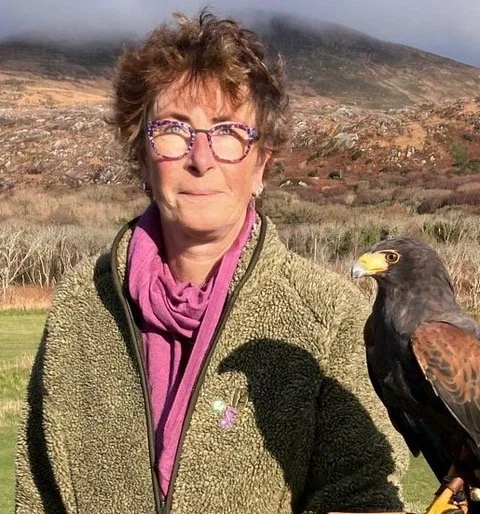
Boukje Tuinhout – Treasurer
Boukje Tuinhout is an office manager for an international bio-agricultural company. She previously worked for the International Association of Falconry and Conservation of Birds of Prey for ten years, where she was closely involved with the global falconry community and the promotion of falconry as a cultural heritage and conservation practice. Boukje has been involved in falconry in the Netherlands for more than 35 years. Introduced to the sport through her husband while he was completing the mandatory Dutch falconry training, she soon embraced the falconer’s lifestyle herself. For Boukje, falconry is about the partnership between falconer, bird, dog, and landscape.

Dr Adrian Lombard – Board Member
Adrian Lombard is President of the International Association for Falconry and Conservation of Birds of Prey (IAF) and has occupied this position since 2013. Prior to this he served as Executive Secretary to the IAF for five years and has been the South African Delegate to that organisation. He has practiced falconry since the age of 12 and has previously held the position of chairman of both the Cape Falconry Club and the South African Falconry Association. He is a medical practitioner in private medical practice in Cape Town, South Africa. He qualified in Medicine at the University of Rhodesia in 1976 and has obtained a Fellowship of the College of Family Practitioners from the college of Medicine of South Africa.

Dr Andrew Dixon, BSc., PhD. – Conservation and Welfare Expert
Andrew Dixon is the Research Projects Manager for Emirates Falconer’s Club, Abu Dhabi, where his work on the ecology and conservation of birds of prey involves both research and conservation management projects. His research projects are focused mainly on the study of population dynamics, to better understand the processes that regulate populations of birds of prey. Dr Dixon’s research work incorporates advanced genetic and genomic approaches together with modern technological techniques, such as satellite telemetry, to address key issues relating to conservation biology. His conservation management projects are founded on scientific research and are targeted at addressing the factors that limit populations of key species, in particular the endangered Saker falcon. Management projects include the provision of artificial nests in areas where the Saker breeding population is limited by nest site availability, and assessment of various methods aimed at reducing the risk of electrocution at power distribution lines. Dr Dixon has worked on research and conservation projects for Abu Dhabi falconers since 2005, including studies of Peregrine and Gyrfalcon in the Russian Arctic and of Saker falcon across much of its Eurasian distribution range from Eastern Europe, through Central Asia to the Tibetan Plateau.

Hilary White – Public Relations Officer
Hilary White is a journalist, writer, falconer and conservationist living in Dublin, Ireland. His writing on falconry and raptors has appeared in national and international outlets, and his debut book City of Hawks will be published by Penguin in 2027. He is a board member of the International Association of Falconry and Conservation of Birds of Prey (IAF) and assists the Irish Hawking Club in matters of culture and public relations. Hilary also works in raptor conservation monitoring in Ireland, with a focus on Hen Harriers. In 2017, he was presented with the IAF Presidential Award for Services to Falconry.